
Why My Perception of My Company Changed Working from Home
By Massimo Brebbia - 2 min read - 28 Oct 2025
“Why My Perception of My Company Changed When I Worked from Home”
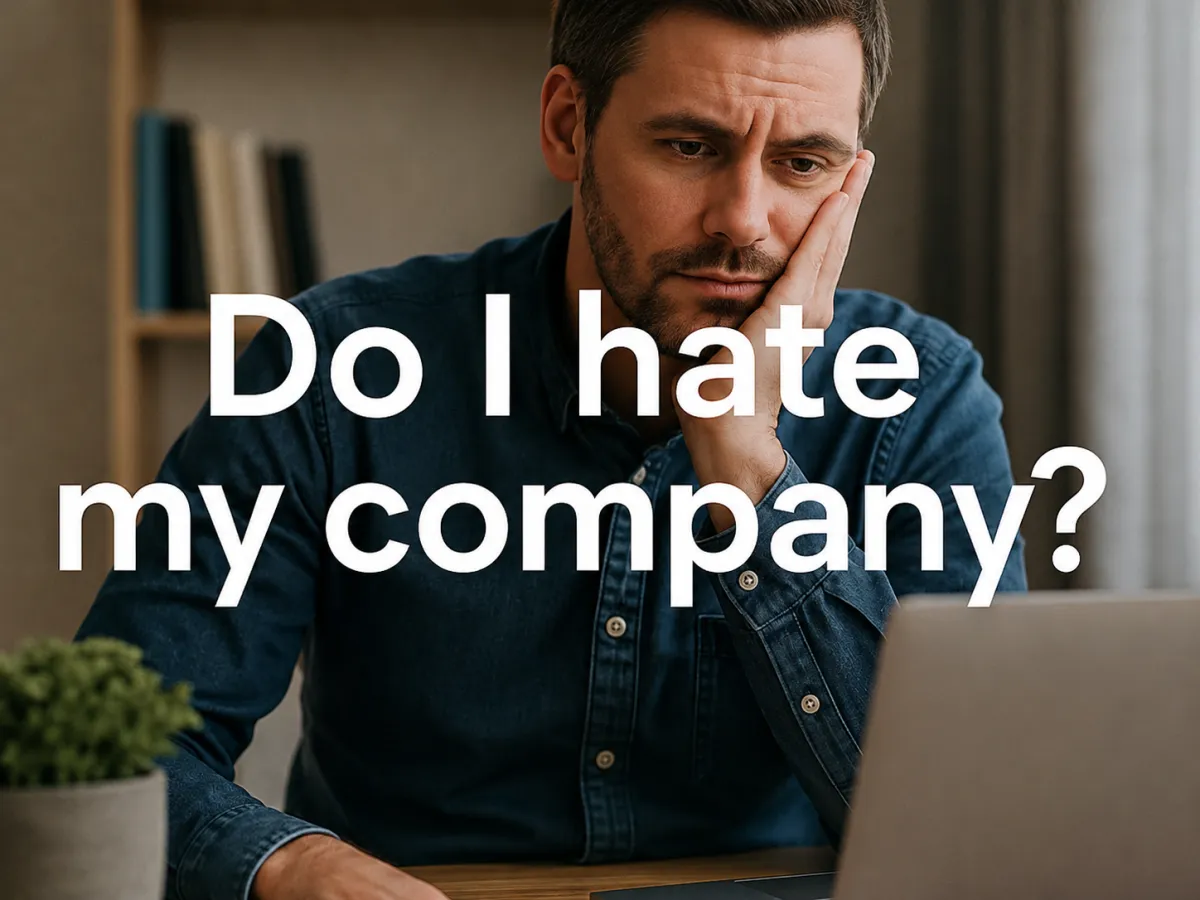
I remember the first months of working from home during the pandemic. At first, it felt like a gift. No commute. More time with my family. Flexibility. But something shifted over time, subtly, quietly. It took me a while to realise what it was. I didn’t hate my job. I didn’t dislike my colleagues. But I had started to feel disconnected, critical, and, surprisingly, negative about the company I had always enjoyed working for.
It puzzled me. I was still attending the same meetings, still doing the same work. But something had changed. The answer, I now believe, lies in the nature of remote interaction.
When you work from home, your main form of interaction with colleagues is often the video call, typically on Teams, Zoom, or Google Meet. And those meetings?
They’re almost always problem-solving sessions. We rarely schedule a meeting to say, “Everything is running smoothly.” We send an email for that. But when something goes wrong? That’s when we jump on a call.
So over time, your exposure to the company becomes skewed. It’s a parade of challenges, issues, crises, delays, miscommunications. That’s what fills your day. And without the office chit-chat, the spontaneous celebrations, the shared smiles after solving a tough issue, your perception narrows. Slowly, your mental picture of the company turns greyer.
It’s not that the company has become worse. It’s that your window into it has changed. You’re not seeing the whole picture.
There’s some evidence to support this. A 2023 article from Harvard Business Review highlighted that remote employees often report feeling less connected to their organizations and colleagues, and more likely to misinterpret tone or intent during digital communications. Other studies have shown that the absence of informal, positive reinforcement moments, like casual praise or hallway “well dones”, can lead remote workers to feel underappreciated, even when their work is valued.
Meanwhile, those in the office live the full spectrum: the early morning laughter, the lunchroom conversations, the hard meetings, yes, but also the celebrations when things go right. Their emotional experience is balanced. When asked, “How’s work?” their answer is more likely to be, “It’s a mix, but overall good.” The remote worker, by contrast, recalls the issues discussed in the last six meetings. Their answer often trends negative.
This has consequences. It affects engagement. Retention. Morale.
So, what can we do?
I believe the first step is awareness. If we understand this distortion, we can correct it. Companies can foster more positive interactions online, without being artificial. For example, dedicating time during meetings to share small wins, calling out good work in real time, or even having occasional casual drop-in calls with no agenda. Managers can schedule short one-on-ones to check in on people, not projects. And let’s stop using video calls only for what’s wrong.
As individuals, we can also take small steps. I started making a habit of writing down three good things about my work week every Friday. It helped restore perspective.
Remote work is here to stay, and that’s not a bad thing. But we need to design it with the human brain in mind. We’re storytellers by nature. Let’s make sure the stories we hear about our companies aren’t only the ones about problems.
Because sometimes, the company hasn’t changed at all, just the lens through which we’re looking.
This article is also published on Medium as part of my public research and writing.
Continue Reading:
Legal AI: Opportunity without Governance can become a liability
Implementing AI in your business? A Guide to Infrastructure and Cloud Solutions
AI and Hazard Observation Card Analytics: A deep, comprehensive exploration