LEARNING PATH
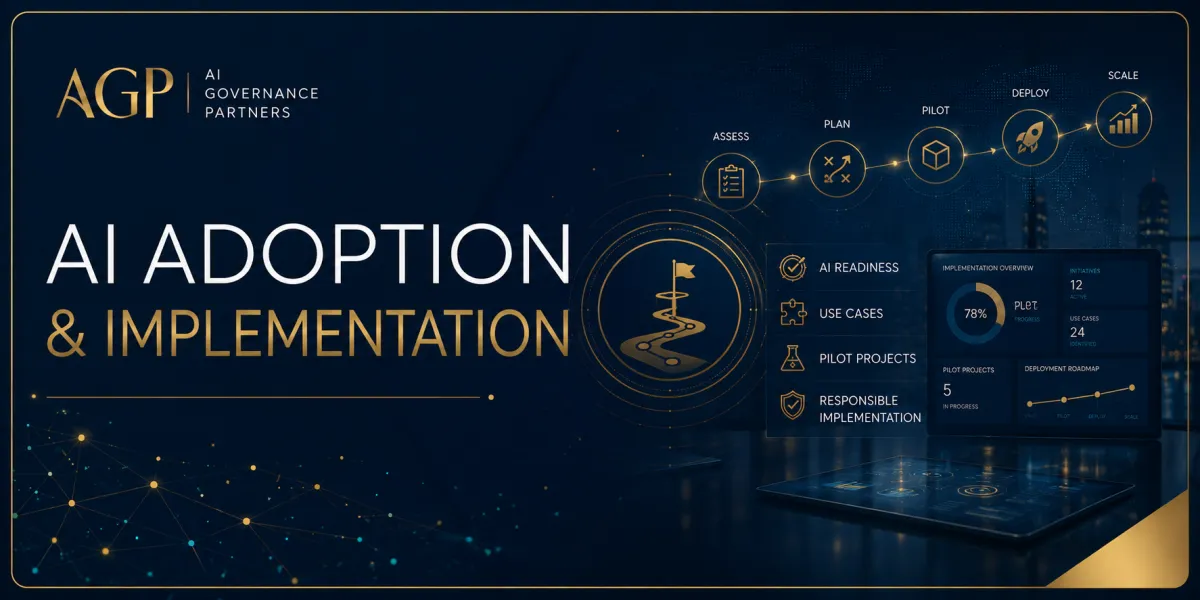
AI Adoption & Implementation
A practical learning path for leaders, sponsors and transformation teams responsible for identifying valuable AI opportunities, preparing the organisation and moving from experimentation to controlled implementation.

Organisational readiness. Relevant use cases. Responsible implementation.
Understand the organisational conditions, decisions and responsibilities required for responsible AI adoption
Who Should Follow This Path?
This path is designed for professionals responsible for evaluating AI opportunities, sponsoring initiatives and preparing people, processes and governance arrangements for responsible implementation.
Transformation Leaders
Innovation and Digital Teams
Business Sponsors
Project and Programme Leaders
Why This Matters
Successful AI adoption depends on more than selecting capable technology. Organisations need a clear business purpose, sufficient readiness and controlled implementation arrangements that connect technology with people, processes and accountability.

Organisational Readiness
AI initiatives should reflect the organisation’s current capabilities, operating environment, data conditions and governance maturity.

Controlled Adoption
Pilots and early implementations should test both potential value and the organisation’s ability to manage associated risks and responsibilities.

Implementation Capability
Sustainable adoption requires appropriate ownership, workforce competence, process integration and continuing oversight.
Key Areas for Responsible AI Adoption
Responsible implementation does not begin with the purchase of an AI product. It begins with a clear organisational need, accountable ownership and an informed understanding of whether the organisation is prepared to adopt the technology responsibly.
01 Organisational Readiness
Managers should know which AI tools are being used within their teams, what work they support and whether that use has been formally approved.
02 Business Purpose and Use-Case Relevance
AI initiatives should address a clearly defined organisational need and demonstrate why artificial intelligence is appropriate for the intended activity.
03 Ownership and Decision Accountability
Each significant initiative should have an identified business sponsor and clear responsibility for its purpose, decisions, risks and outcomes.
04 Controlled Pilots and Evaluation
Early-stage initiatives should test expected value, operational implications, human oversight and governance requirements before wider deployment is considered.
05 Implementation and Scale
Moving beyond a pilot should be treated as an organisational decision involving people, processes, controls and continuing oversight—not only as a technical deployment.
Warning Signs to Recognise
AI initiatives can appear successful during early experimentation while important organisational weaknesses remain unresolved. The following indicators may suggest that adoption is progressing without sufficient readiness, ownership or control.
01 ⚠️ Technology-Led Adoption
The organisation begins with a product or platform before clearly defining the business problem, expected value or organisational need.
02 ⚠️ Unclear Business Ownership
An AI initiative is managed primarily by a technology team or vendor without an accountable business owner responsible for its purpose and outcomes.
03 ⚠️ Limited Readiness Assessment
The organisation assumes that access to technology demonstrates readiness without examining data, processes, skills, governance or operational capacity.
04 ⚠️ Uncontrolled Experimentation
Pilots use live data, influence business activity or involve employees without appropriate visibility, approval or oversight.
05 ⚠️ Success Measured Too Narrowly
An initiative is considered successful because the technology works, while adoption, operational impact, risk and organisational value receive limited attention.
06 ⚠️ Scaling Before Control Is Established
A pilot moves towards wider deployment before responsibilities, monitoring, human oversight and operating arrangements are sufficiently clear.
Questions AI Adoption Leaders Should Be Asking
Responsible adoption begins with questions that test whether the initiative is relevant, owned, controlled and supported by sufficient organisational capability.
1. What organisational problem are we trying to solve?
The initiative should respond to a clearly defined need or opportunity. Beginning with a technology product rather than a business problem can result in unnecessary investment, weak ownership and limited organisational value.
2. Why is artificial intelligence appropriate for this use case?
Leaders should consider whether AI provides a meaningful advantage over existing processes or less complex alternatives. AI should not be adopted solely because the technology is available or attracting market attention.
3. Is the organisation ready to support this initiative?
Readiness extends beyond technical infrastructure. It includes data, processes, workforce competence, governance arrangements, operational capacity and the ability to maintain appropriate oversight.
4. Who owns the initiative and its outcomes?
Each significant AI use should have a clearly identified business sponsor who understands the intended purpose, accepts accountability and can make informed decisions throughout the initiative.
5. What should the pilot demonstrate?
A pilot should provide evidence about expected value, operational practicality, user adoption, limitations, risks and governance requirements. Technical performance alone may not be sufficient.
6. Where will human judgement and oversight remain necessary?
Leaders should understand which activities AI may support or influence and where human review, professional judgement, approval or intervention must remain part of the process.
7. What conditions must be met before wider deployment?
Scale-up should depend on evidence that the intended value, responsibilities, controls and operating arrangements are sufficiently understood and sustainable within the organisation.
What Effective AI Adoption and Implementation Looks Like
Effective adoption connects a relevant business purpose with organisational readiness, accountable ownership and proportionate governance throughout implementation.
Responsible implementation is demonstrated when the organisation can explain why AI is being adopted, who is accountable and what evidence supports progression from experimentation to wider use.
01 Clear Business Purpose
AI initiatives address defined organisational needs and have credible expectations for value, improvement or capability development.
02 Readiness Is Understood
Leaders have considered the organisation’s data, processes, skills, technology, governance and operational capacity before significant commitments are made.
03 Accountable Ownership
Each material initiative has a business sponsor who accepts responsibility for its purpose, decisions, risks and outcomes.
04 Controlled Experimentation
Pilots operate within defined boundaries and generate evidence about value, limitations, operational implications and governance requirements.
05 People and Processes Are Prepared
Workforce guidance, management responsibilities and operational processes evolve alongside the technology rather than being addressed after deployment.
06 Evidence-Based Scale-Up
Wider implementation is approved only when the organisation has sufficient evidence that value, responsibilities, oversight and operating arrangements are sustainable.
From Awareness to Organisational Action
This learning path provides role-specific guidance to support informed discussion, stronger oversight and better decisions around artificial intelligence. Effective AI governance requires an organisation-specific understanding of objectives, risks, responsibilities, existing controls and operating conditions.
Need Support Applying This to Your Organisation?
AGP helps organisations translate AI governance principles into a practical and proportionate approach aligned with their activities, risk profile and level of AI adoption.