LEARNING PATH
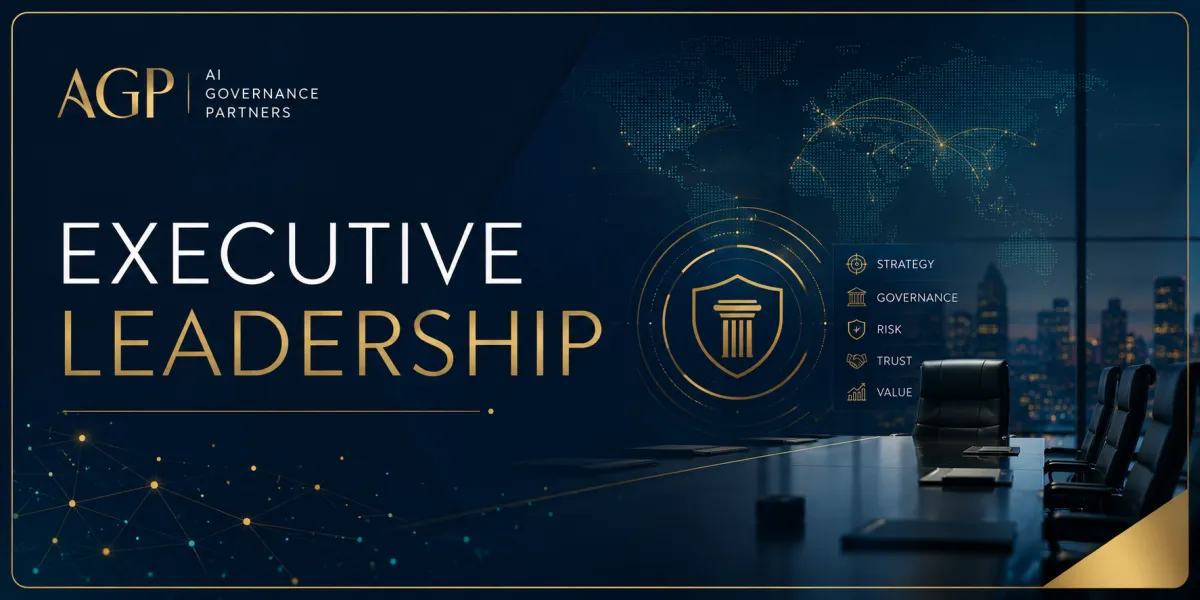
Executive Leadership
A guided introduction for board members, executives and senior leaders who need to understand their responsibilities when artificial intelligence is adopted across the organisation.

Strategic oversight. Clear accountability. Informed decisions.
Understand the responsibilities, risks and questions that matter at leadership level
Who Should Follow This Path?
This path is designed for decision-makers who may not manage AI systems directly but remain accountable for the strategic, financial, operational and reputational consequences of artificial intelligence.
Board Members
Chief Executives
Executive Committees
Senior Functional Leaders
Why This Matters
AI adoption changes how decisions are made, how responsibility is assigned and how organisational assurance is demonstrated. Senior leaders need sufficient visibility and evidence to exercise effective oversight.

Accountability
Responsibility for AI-enabled decisions cannot be delegated entirely to technology teams or external vendors.

Visibility
Leaders cannot oversee AI use that has not been identified, assessed or assigned to a responsible owner.

Evidence
Policies and assurances are not enough on their own. Leadership needs credible evidence that governance arrangements operate in practice.
Key Areas for Executive Oversight
Effective leadership does not require executives to become AI specialists. It does require informed oversight of the strategic, organisational and risk implications associated with AI adoption.
01 Strategic Alignment
AI initiatives should support defined organisational objectives rather than follow technology trends or isolated departmental interests.
02 Leadership Accountability
Senior leaders remain accountable for the decisions, risks and consequences associated with AI adoption.
03 Organisational Readiness
Technical capability alone does not mean that the organisation is prepared to use artificial intelligence responsibly.
04 Risk and Oversight
Different AI uses create different levels of impact and require proportionate leadership attention and oversight.
05 Investment Decisions
Expected value, organisational impact and acceptable exposure should be understood before significant AI investment is approved.
Warning Signs to Recognise
AI governance weaknesses are not always visible through policies or formal reporting. The following indicators may suggest that executive oversight, accountability or organisational control requires closer attention.
01 ⚠️ Limited Visibility
Senior leaders cannot clearly identify where artificial intelligence is currently being used across the organisation.
02 ⚠️ Unclear Accountability
AI initiatives operate without a clearly named business owner who accepts responsibility for their decisions, risks and outcomes.
03 ⚠️ Fragmented Adoption
Departments procure or use AI tools independently, with limited coordination or consistent organisational oversight.
04 ⚠️ Weak Evidence
Management provides assurances about AI governance but cannot demonstrate that appropriate review, control and oversight operate in practice.
05 ⚠️ Uncontrolled Decision Influence
AI-generated outputs influence important decisions without clearly defined human review, challenge or escalation.
06 ⚠️ Governance is Siloed
Responsibility for AI governance is treated solely as an IT, legal or compliance matter rather than a shared leadership and operational responsibility.
Questions Leaders Should Be Asking
Effective executive oversight begins with the right questions. These prompts can help leadership teams examine whether AI adoption is visible, accountable and aligned with organisational priorities.
1. Where is AI currently being used across the organisation?
Leadership should have sufficient visibility over formally approved systems and less visible employee-led use. Without that visibility, the organisation cannot properly understand its exposure, dependencies or accountability.
2. Who is accountable for each significant AI use?
Every material AI use should have clear business ownership. Accountability remains with the organisation even when the technology is supplied, hosted or operated by an external vendor.
3. Which decisions can AI influence?
Leaders should understand whether AI informs, recommends, supports or automates decisions, particularly where those decisions affect employees, customers, safety, finance or legal obligations.
4. What evidence demonstrates that AI risks are controlled?
Policies and management assurances should be supported by credible evidence that review, oversight and governance arrangements operate in practice.
5. How is informal or unapproved AI use being addressed?
Employees may adopt readily available AI tools before formal approval or governance arrangements exist. Leadership should understand whether this activity is visible and whether it creates material organisational exposure.
6. Are AI investments linked to defined business objectives?
AI initiatives should address a clearly identified organisational need and have an accountable owner. Technology acquisition alone does not demonstrate strategic value or responsible adoption.
7. Can we explain our AI governance approach to external stakeholders?
The organisation should be able to describe its governance approach clearly to clients, regulators, shareholders and other stakeholders when required.
What Effective Executive Oversight Looks Like
Effective oversight does not require executives to manage AI systems directly. It requires sufficient visibility, accountability and evidence to make informed decisions and challenge management appropriately.
01 Clear Visibility
Leadership has a credible view of where significant AI use exists across the organisation.
02 Assigned Accountability
Material AI initiatives have identified business owners who accept responsibility for their purpose, risks and outcomes.
03 Proportionate Oversight
The level of leadership attention reflects the potential impact of each AI use rather than applying the same approach to every initiative.
04 Evidence-Based Assurance
Executive confidence is supported by evidence that governance arrangements operate in practice.
05 Strategic Alignment
AI investment and adoption are connected to defined organisational priorities and expected business value.
06 Ongoing Leadership Attention
AI governance is treated as a continuing leadership responsibility rather than a one-time approval or policy exercise.
From Awareness to Organisational Action
This learning path provides role-specific guidance to support informed discussion, stronger oversight and better decisions around artificial intelligence. Effective AI governance requires an organisation-specific understanding of objectives, risks, responsibilities, existing controls and operating conditions.
Need Support Applying This to Your Organisation?
AGP helps organisations translate AI governance principles into a practical and proportionate approach aligned with their activities, risk profile and level of AI adoption.