LEARNING PATH
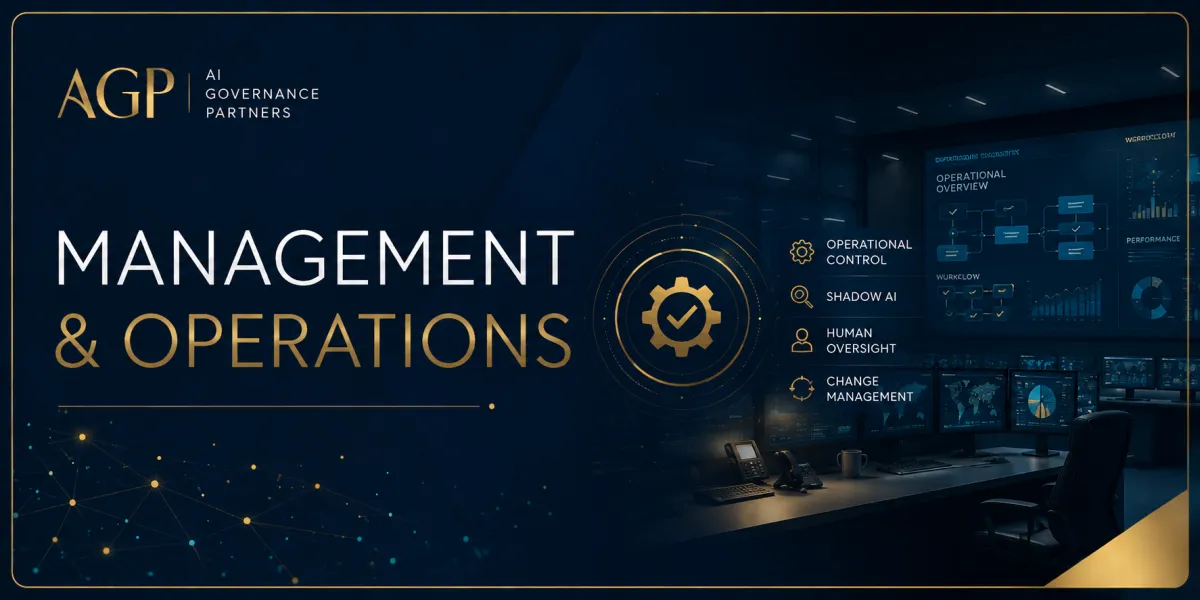
Management & Operations
A practical learning path for managers, department heads and operational leaders responsible for AI-enabled work, employee use and day-to-day organisational control.

Operational control. Human oversight. Responsible adoption.
Understand how AI changes managerial responsibilities, operational risk and workforce oversight
Who Should Follow This Path?
This path is designed for managers and operational leaders who supervise people, processes and business activities increasingly influenced by artificial intelligence.
Department Managers
Operations Leaders
Functional Heads
Team Supervisors
Why This Matters
AI changes how work is performed, reviewed and controlled. Managers need sufficient visibility over employee use, clear responsibility for AI-assisted outputs and practical oversight of changing operational processes.

Operational Control
AI-enabled activities should remain visible and integrated into normal management and operational-control processes.
Human Oversight
Managers must understand where human review, judgement and intervention remain necessary when AI supports or influences work.
Workforce Adoption
Employees may begin using accessible AI tools before formal approval, guidance or organisational controls are established.
Key Areas for Management and Operational Oversight
Managers do not need to become AI specialists. They do need practical visibility over how AI is used, where human judgement remains necessary and how AI-generated outputs affect people, processes and operational decisions.
01 Visibility of AI Use
Managers should know which AI tools are being used within their teams, what work they support and whether that use has been formally approved.
02 Human Review and Accountability
Responsibility for the quality and consequences of AI-assisted work remains with the people and managers accountable for the underlying activity.
03 Process and Workflow Control
AI-generated outputs should enter operational processes through clearly understood review, approval and supervision arrangements.
04 Workforce Guidance and Competence
Employees need sufficient guidance to understand appropriate use, limitations, confidentiality risks and when human judgement must take priority.
05 Escalation and Operational Change
Managers should recognise when AI-related issues, vendor changes or unexpected outputs require escalation, investigation or additional oversight.
Warning Signs to Recognise
Operational AI risks often emerge through everyday working practices before they appear in formal reports. The following indicators may suggest that AI-enabled work is not sufficiently visible, supervised or controlled.
01 ⚠️ Unapproved AI Use
Employees use publicly available or personal AI tools for company work without formal approval, guidance or organisational visibility.
02 ⚠️ Unclear Review Responsibilities
Teams use AI-generated outputs without a clear understanding of who must review, approve or accept responsibility for the final work.
03 ⚠️ Sensitive Information Exposure
Employees enter confidential, personal or commercially sensitive information into AI tools without understanding how that information may be processed or retained.
04 ⚠️ Excessive Reliance on AI Outputs
AI-generated content, recommendations or analysis are accepted with limited challenge, verification or professional judgement.
05 ⚠️ Inconsistent Working Practices
Different teams use AI in different ways, creating variable standards, duplicated effort and uneven levels of operational control.
06 ⚠️ Limited Escalation and Learning
AI-related errors, unexpected outputs or process failures are corrected informally but are not recorded, escalated or used to improve organisational practice.
Questions Managers Should Be Asking
Effective operational oversight begins with practical questions about how AI is being used, reviewed and controlled within everyday work.
1. Which AI tools are currently being used by my team?
Managers should have sufficient visibility over formally approved tools and informal employee-led use. This includes understanding what activities the tools support and whether their use is consistent with organisational expectations.
2. What information are employees entering into AI tools?
Managers should understand whether confidential, personal, client-related or commercially sensitive information may be exposed through AI use. Employees may not always recognise the implications of the information they submit.
3. Who is responsible for reviewing AI-generated work?
Responsibility for the final output should remain clear. Managers should understand who must verify, approve or challenge AI-assisted work before it influences operational activity or business decisions.
4. Where must human judgement take priority?
AI may support analysis, drafting or recommendations, but managers should recognise where professional judgement, contextual understanding or formal approval remains essential.
5. Are employees relying too heavily on AI-generated outputs?
Managers should consider whether AI outputs are being accepted without sufficient checking, challenge or comparison with other evidence and professional knowledge.
6. What happens when AI produces an unexpected or incorrect result?
Teams should know when an issue requires correction, escalation or further review. Repeated problems should not remain informal or invisible to management.
7. Have recent tool, vendor or process changes affected our controls?
AI services can change through updates to models, features, access arrangements or vendor terms. Managers should remain alert to changes that may affect existing working practices or operational risk.
What Effective Management Oversight Looks Like
Effective operational oversight ensures that AI-supported work remains visible, accountable and subject to appropriate human judgement throughout everyday business activities.
Effective oversight is demonstrated when managers can explain how AI is used, who reviews its outputs and how issues are identified and escalated.
01 Clear Visibility
Managers have a credible understanding of which AI tools are used, by whom and for what operational purpose.
02 Defined Review Responsibilities
Teams understand who must check, approve or challenge AI-generated work before it is relied upon.
03 Appropriate Human Judgement
AI supports employees and managers without replacing professional judgement where context, experience or accountability is required.
04 Consistent Working Practices
Teams follow clear and proportionate expectations for using AI across comparable activities and processes.
05 Controlled Information Use
Employees understand the limits on entering confidential, personal or commercially sensitive information into AI tools.
06 Active Escalation and Learning
Errors, unexpected outputs and control weaknesses are reported, reviewed and used to strengthen future working practices.
From Awareness to Organisational Action
This learning path provides role-specific guidance to support informed discussion, stronger oversight and better decisions around artificial intelligence. Effective AI governance requires an organisation-specific understanding of objectives, risks, responsibilities, existing controls and operating conditions.
Need Support Applying This to Your Organisation?
AGP helps organisations translate AI governance principles into a practical and proportionate approach aligned with their activities, risk profile and level of AI adoption.